PR Peoria Tennis Court ResurfacingPeoria, IL
Peoria, IL

Tennis Court Resurfacing in Peoria

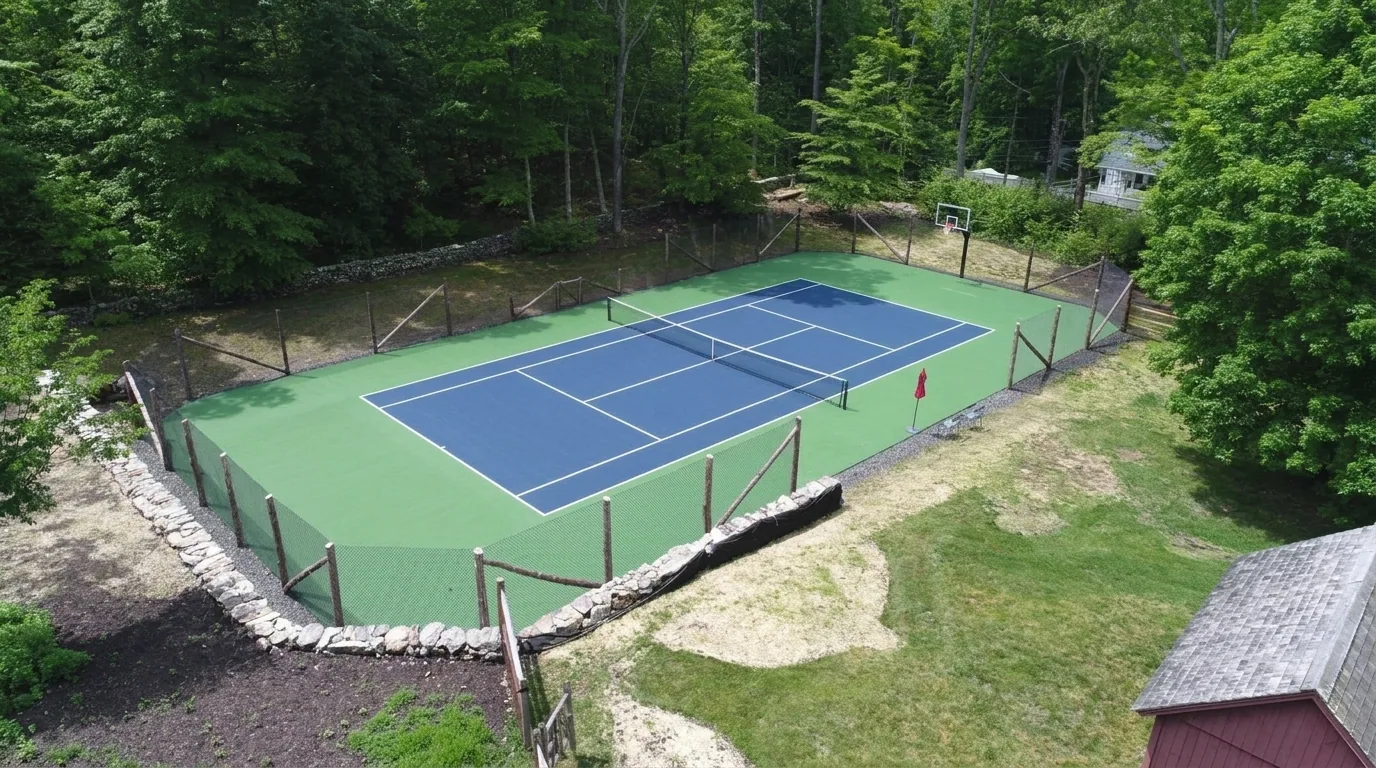
Repairing and recoating an asphalt or concrete tennis court: crack repair, patching of low spots, then acrylic resurfacer and color coats with new line striping. Restores playing surface and pace without rebuilding the base.

Calls go straight to the local company that does this work. No call center, no fee to you.

Get a quote on your project

Tell us what you need. We pass it to the local company we work with, usually the same business day.

Give us a phone number or an email so someone can reach you. By sending this you agree we may share it with the local company that does this work so they can contact you about the project. We do not sell your information. Not for emergencies — call 911.

The short version

Tennis Court Resurfacing, explained

Resurfacing and reconstruction get conflated, and the price difference is large. Resurfacing repairs cracks and depressions and applies new acrylic layers over a base that is fundamentally sound. Reconstruction means the asphalt or concrete slab itself has failed and has to be overlaid or replaced. Some widely quoted 'resurfacing' figures are actually reconstruction numbers, which is why published ranges for this trade look so wide.

Cracks are the decision point. Hairline surface cracking is routine and repairable. Structural cracking that moves seasonally will telegraph back through any coating within a season or two, no matter how carefully it is filled. An honest contractor will tell you when a court needs an overlay rather than selling you a color coat that will look excellent for one summer.

Tennis Court Resurfacing — typical work profile.

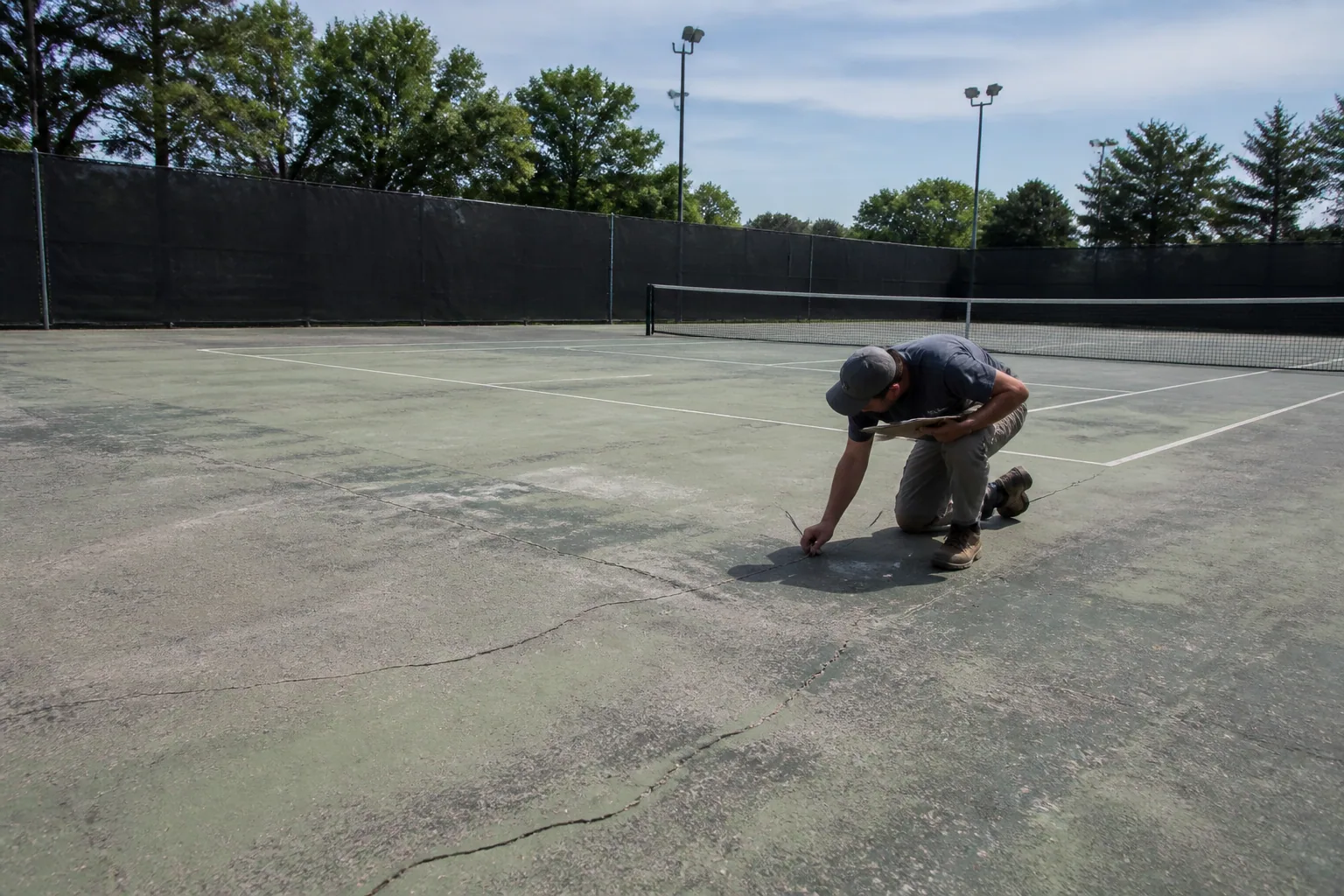
Surface and crack assessment

Distinguishing surface crazing from structural cracking that moves, and identifying birdbaths where water sits. This determines whether a resurface is appropriate at all.

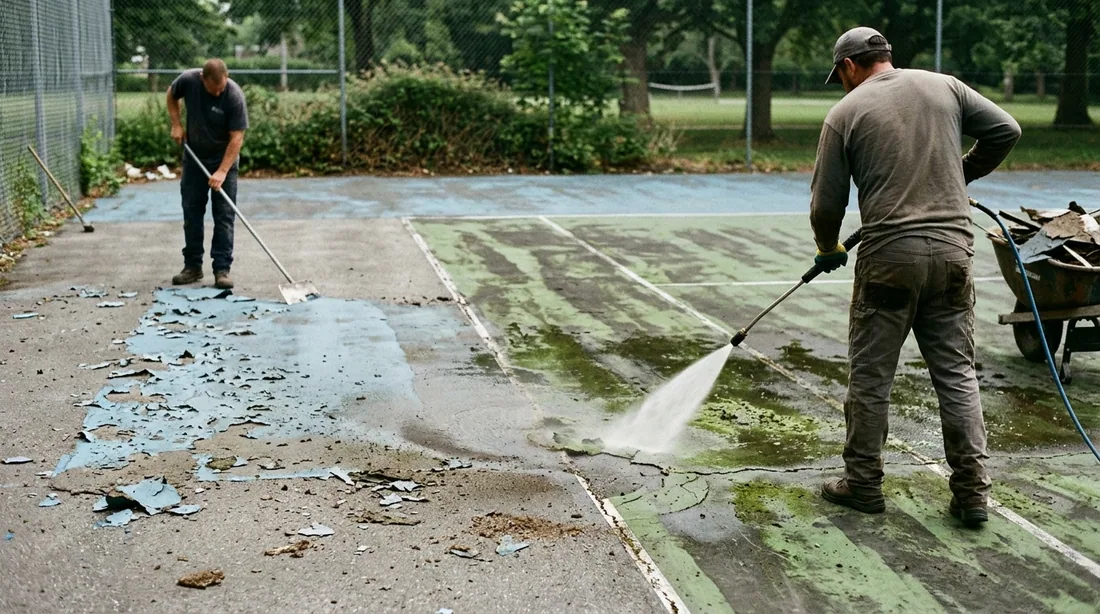
Cleaning and preparation

Court pressure washed, vegetation and organic growth removed, and any failing existing coating scraped back. Coating over dirt or algae is a guaranteed adhesion failure.

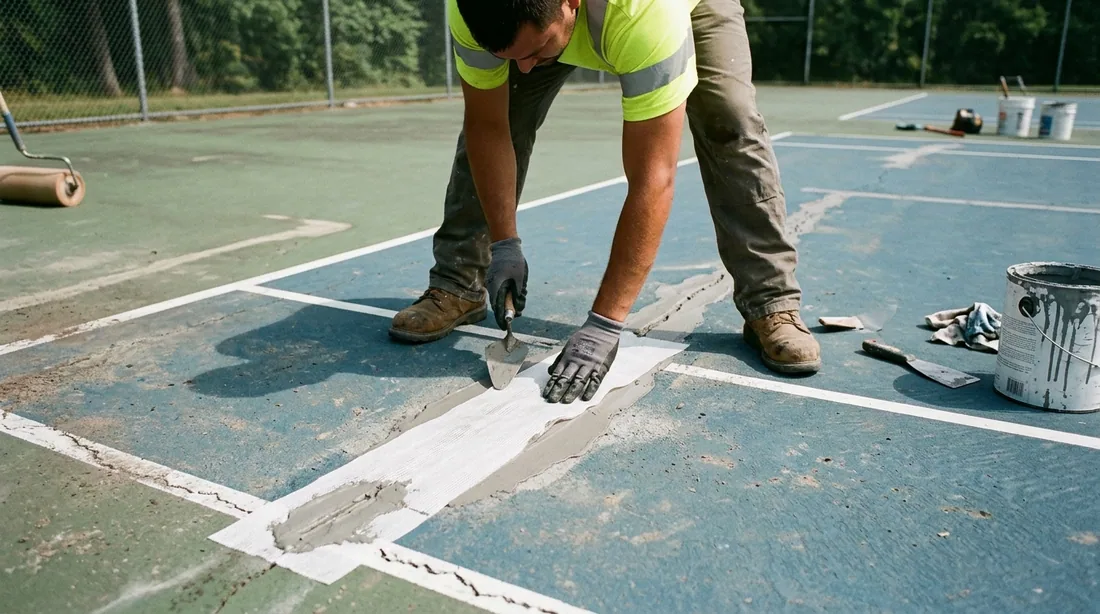
Crack repair

Cracks routed, cleaned and filled with an appropriate patching system. Larger moving cracks may need a fabric or membrane bridging system rather than simple filler.

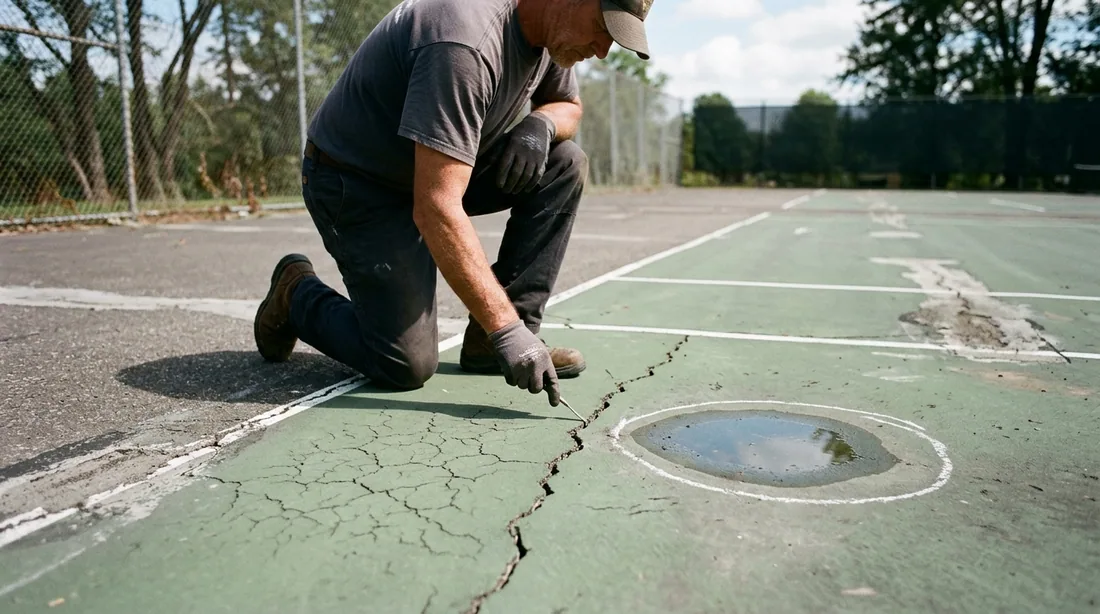
Patching low spots

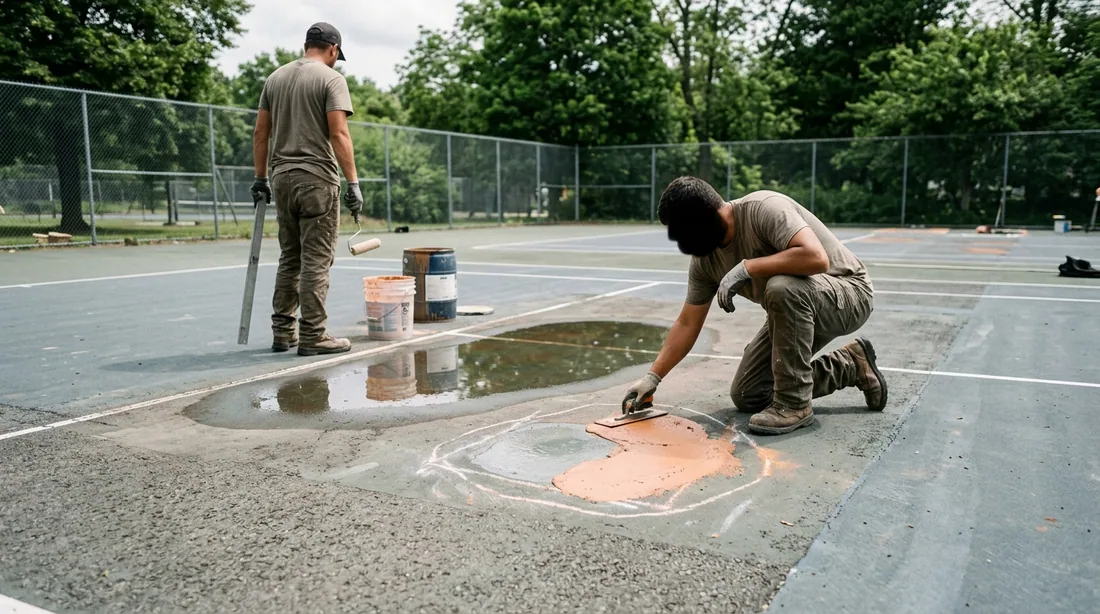
Standing water is both a playing and a durability problem. Birdbaths are filled and feathered so the surface drains, usually checked by flooding the court and marking where water stands.

Acrylic resurfacer and color

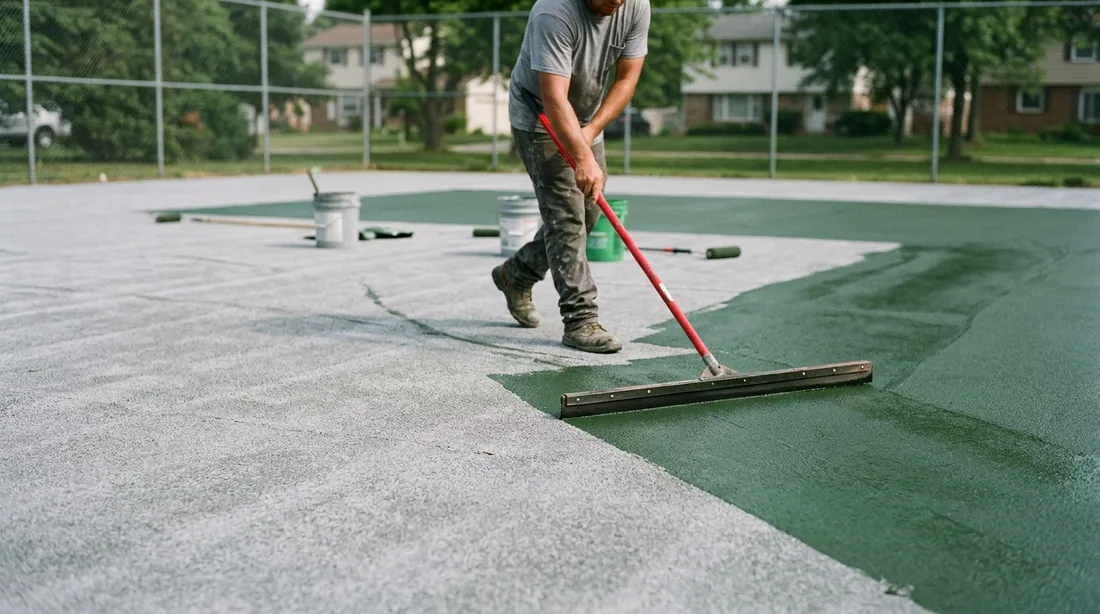
A resurfacer levels texture and seals, then color coats are applied. The number of coats and the sand loading in them set the pace of the finished surface.

Line striping

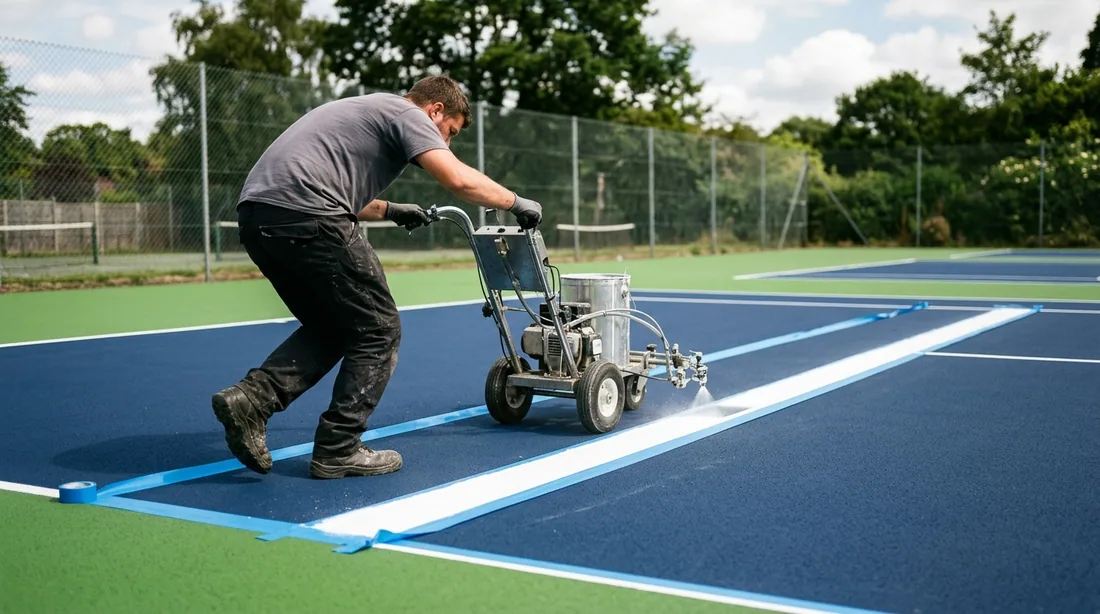
Lines laid out to specification, taped and painted. Adding pickleball lines, whether blended or in a contrasting color, is a common addition worth deciding before striping.

Budgeting

What it costs

Published sources differ noticeably. One puts the national average at $10,000 with a typical $8,000 to $12,000 band; another gives an average of $7,541 with most spending $2,467 to $12,615. Be careful with published figures for asphalt and synthetic grass in the $20,000 to $80,000 range: those describe reconstruction, not an acrylic recoat, and quoting them as resurfacing costs is misleading. Doing adjacent courts together attracts a strong volume discount.

$4,000$8,000$12,000$16,000Acrylic recoat, sound base$4,000–$8,000Recoat with crack repair and patching$6,000–$12,000Cushioned acrylic system$9,000–$16,000most projects land here
Typical ranges, per court. The dot marks where most projects land; the bar is the full spread we found. These are planning figures, not a quote.
ScopeTypical rangeMost common
Acrylic recoat, sound base$4,000 – $8,000$6,000
Recoat with crack repair and patching$6,000 – $12,000$9,000
Cushioned acrylic system$9,000 – $16,000$12,000

Ranges compiled from Fixr, HomeAdvisor. Reviewed 2026-07-18.

Peoria specifics

What is different about this work in Peoria

Local climate and building stock change how this job is specified. These figures come from the Census Bureau and NOAA climate normals for Peoria.

  • With roughly 78.9 freeze-thaw cycles a year here, water that gets into an unfilled crack expands each cycle and widens it, which is why crack repair and drainage matter more for court life in this climate than the color system chosen.
  • At around 36.5 inches of precipitation a year, low spots that hold standing water are a durability problem as much as a playing one, so the flood test before resurfacing is worth insisting on here.
  • With mean July highs near 85.6°F, surface temperatures on a dark color coat run considerably higher than air temperature, which is worth weighing when choosing court color and when scheduling coating work to avoid flash-drying.

More on local conditions →

Scoping

Do you actually need this done?

The most expensive mistake is paying for the wrong scope. Here is how the usual symptoms sort out.

What you are seeing, and what it usually meansFine surfacecrazing, novertical movementStandardresurfacingcandidateCracks that openand close with theseasonsStructural; needsmembrane system oroverlayWater stands forhours after rainBirdbaths needpatching before anycoatingCoating flaking offin sheetsAdhesion failure;must be removed,not coated over
Common starting points. An on-site look is what settles it.

Process

How the job runs

  1. Assess and flood test

    Cracks evaluated for movement and the court flooded to reveal where water stands. Both determine scope, and both should happen before a firm price is given.

  2. Clean and prepare

    Pressure washing, removal of organic growth, and scraping of any delaminating existing coating. Adhesion depends entirely on this step.

  3. Repair cracks and low spots

    Cracks routed and filled, or bridged where they move. Birdbaths patched and feathered, then re-flooded to confirm the water now drains.

  4. Apply resurfacer and color

    Acrylic resurfacer squeegeed to level texture, then color coats. Each layer needs to cure and weather conditions govern the schedule tightly.

  5. Stripe and cure

    Lines laid out, taped and painted to specification, then the court left to cure fully before play. Playing early scuffs coatings that have not hardened.

Common questions

Questions people ask

How much does it cost to resurface a tennis court?

Published averages differ: one source puts the national average at $10,000 with a typical band of $8,000 to $12,000, another gives an average near $7,500 with most spending $2,500 to $12,600. Treat much higher published figures with care, as they often describe reconstruction rather than an acrylic recoat. Doing multiple adjacent courts in one visit reduces the per-court cost noticeably.

How often should a tennis court be resurfaced?

Most acrylic courts need resurfacing somewhere in the region of every four to eight years, driven by usage, climate exposure and how well the surface has been kept clean. Courts under trees, or in climates with heavy freeze-thaw, sit at the shorter end. Regular cleaning to prevent organic growth is the cheapest thing you can do to extend the interval.

What is the difference between resurfacing and reconstruction?

Resurfacing repairs and recoats a base that is structurally sound, and is what most courts need. Reconstruction addresses failure in the asphalt or concrete slab itself, usually through an overlay or full replacement, and costs several times more. Confusion between the two is the main reason published price ranges for this work look so inconsistent.

Can cracks be permanently repaired?

Surface crazing can be filled and will generally stay filled. Structural cracks that move with temperature and moisture will eventually telegraph back through any patch or coating; the realistic goal is managing them rather than eliminating them. Membrane and fabric bridging systems buy considerably more time than simple filler, and an overlay resets the surface entirely.

Will resurfacing change how the court plays?

Yes, and it is adjustable. The amount of sand in the color coats determines the surface texture and therefore the pace. More sand slows the ball and adds grip; less makes for a faster court. If you have a preference, say so before the color coats go on, because it cannot be changed afterwards without recoating.

Full detail on how this work is done →

Next step

Get a real number for your project

Ranges only go so far. Someone has to look at the actual job.

What this site is

Peoria Tennis Court Resurfacing is a referral site, not a contractor. We do not hold a license, own a truck, or send a crew. We research tennis court resurfacing pricing and practice, publish what we find, and hand your request to the local company we work with in Peoria.

That company quotes, schedules, and stands behind its own work, and it contracts with you directly. We do not mark up the price, and you pay us nothing.

Send your project details

Goes to the local company that does this work.

Give us a phone number or an email so someone can reach you. By sending this you agree we may share it with the local company that does this work so they can contact you about the project. We do not sell your information. Not for emergencies — call 911.

Call (765) 586-5332Send details